

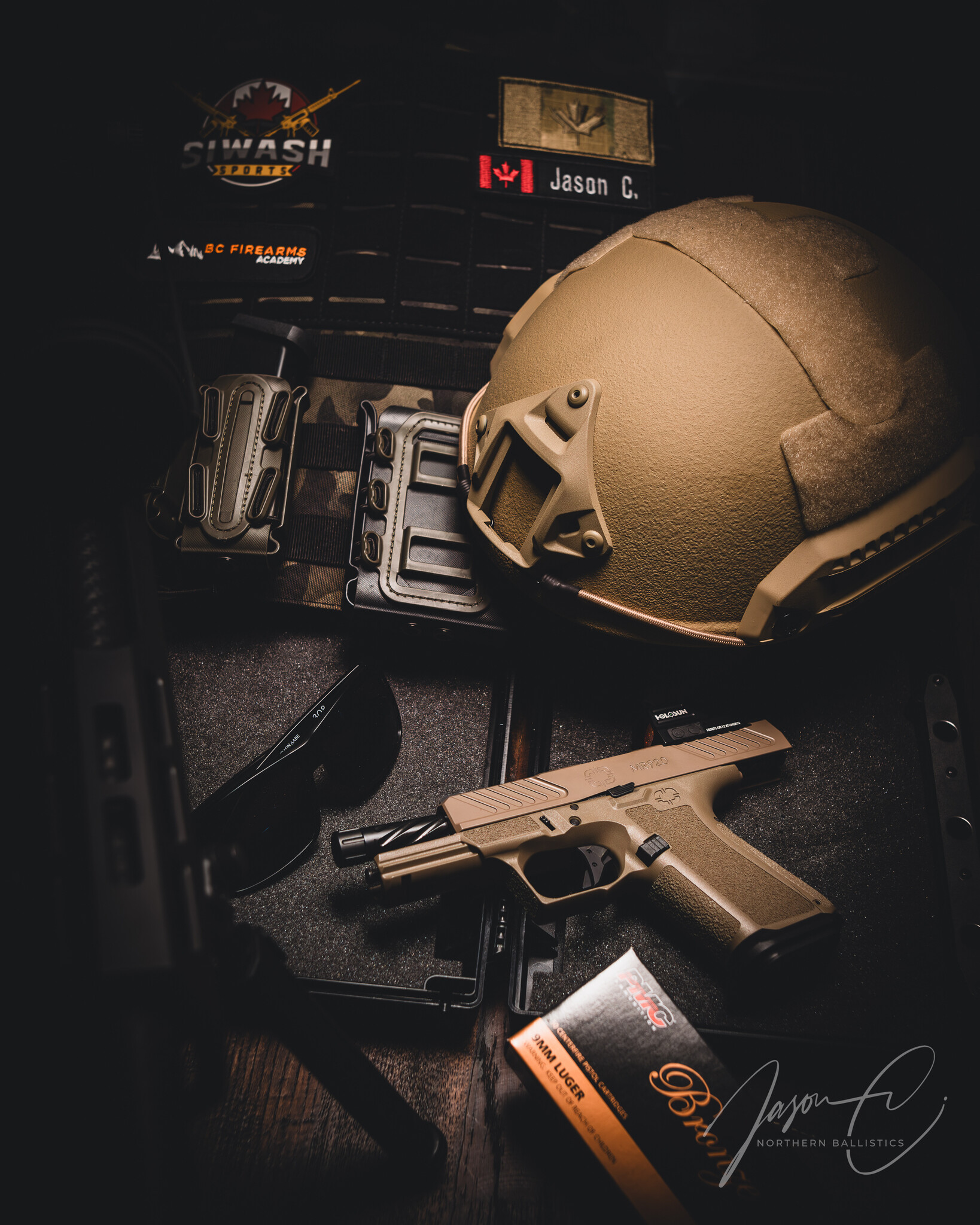
The Evolution of Tactical Gear in Modern Shooting
The realm of tactical gear has undergone a significant transformation as advancements in technology and materials science have revolutionized the way military and law enforcement personnel equip themselves for the field. This article delves into the evolution of tactical gear in modern shooting, tracing its journey from simple utility items to sophisticated high-tech equipment. We explore the impact of these changes on the effectiveness and safety of operatives in various combat and tactical situations.
Key Takeaways
-
Tactical gear has progressed from basic gear to advanced systems incorporating smart technology and modular designs.
-
The transition to synthetic fibers has greatly enhanced the functionality and durability of combat uniforms and equipment.
-
Ergonomic design and the adaptability of field equipment have improved operational efficiency and individual performance.
-
Technological innovations such as night vision, thermal imaging, and communication devices have become critical components in modern tactical gear.
-
Training methods have evolved to include simulators and virtual reality, providing realistic scenarios for testing and developing new gear.
From Utility to High-Tech: A Gear Timeline
The Early Days of Tactical Gear
In the nascent stages of tactical gear, the focus was squarely on the basics: firearm calibers, optics, clothing, and the essential accessories for a day in the field. This era was characterized by a utilitarian approach, where functionality trumped form, and the gear was as rugged as the individuals who used it.
The early gear was a far cry from today's high-tech equipment, often cobbled together from whatever was at hand, including surplus items and rudimentary hunting supplies.
As the needs of shooters evolved, so did the gear. A simple list of what was available back then includes:
-
Rifles and shotguns
-
Reloading equipment
-
Various ammunition types
-
Basic optics
-
Clothing suited for the outdoors
This gear laid the groundwork for the sophisticated systems we see today, setting the stage for the modular, high-tech, and ergonomic equipment that would follow.
The Rise of Modular Systems
The modular approach to tactical gear has revolutionized the way soldiers and law enforcement officers prepare for their duties. Gone are the days of one-size-fits-all equipment; now, individuals can tailor their gear to the mission at hand. This customization isn't just about comfort—it's about efficiency and effectiveness in the field.
-
MOLLE systems (Modular Lightweight Load-carrying Equipment) allow for the attachment of various pouches and accessories.
-
PALS webbing (Pouch Attachment Ladder System) provides a standardized grid for securing gear.
-
Quick-release buckles and hook-and-loop fasteners offer rapid adaptability and on-the-go adjustments.
The beauty of modular systems lies in their ability to be reconfigured for any scenario, from urban operations to wilderness survival.
With the advent of modular systems, the market has seen a surge in specialized products. Firearm accessories, optics, clothing, and hunting supplies have become more sophisticated, catering to the diverse needs of tactical personnel. The table below highlights the growth in availability of such items:
|
Year |
Firearm Accessories |
Optics |
Clothing |
Hunting Supplies |
|---|---|---|---|---|
|
2010 |
Moderate |
Limited |
Standard |
Basic |
|
2015 |
Extensive |
Advanced |
Enhanced |
Expanded |
|
2020 |
Prolific |
Cutting-edge |
Adaptive |
Comprehensive |
This table not only shows the expansion of available gear but also reflects the increasing demand for personalization and high-tech solutions in tactical environments.
Incorporating Smart Technology
The leap into the digital age has seen tactical gear become increasingly sophisticated. Smart technology is now a staple in modern equipment, enhancing the capabilities of the user in the field. From GPS-enabled devices that track movements to biometric sensors that monitor health stats, the integration of technology is reshaping the battlefield.
-
GPS and navigation systems
-
Biometric health monitoring
-
Advanced communication tools
The fusion of technology with tactical gear is not just about adding gadgets; it's about creating a seamless interface between the soldier and their equipment, improving response times and situational awareness.
The market is now flush with options that cater to every aspect of shooting sports, from firearms and optics to clothingand accessories. Whether it's for professional use or recreational shooting, the availability of high-tech gear is transforming how we prepare for and engage in shooting activities.
Material Matters: The Fabric of Modern Combat
The Shift to Synthetic Fibers
Gone are the days when tactical gear meant heavy, cumbersome outfits that could barely breathe. The shift to synthetic fibers has revolutionized the way soldiers suit up for battle. These modern materials aren't just lighter; they're engineered to withstand extreme conditions without sacrificing comfort.
-
Durability: Synthetic fibers are resistant to tears, abrasions, and even chemical exposure.
-
Water Resistance: Gear stays dry, reducing the risk of hypothermia in wet environments.
-
Maintenance: Easy to clean and quick to dry, synthetic gear is low-hassle in the field.
The transition to synthetics isn't just about performance. It's also about logistics. With materials that are easier to produce and maintain, armies can equip their troops more efficiently and effectively.
This isn't just about the clothing, though. The evolution extends to all aspects of tactical gear, including firearms, optics, clothing, accessories, and even the gear for shooting sports. Whether it's for the military or civilian enthusiasts, the benefits of synthetic fibers are clear across the board.
Breathability Meets Bulletproof
In the quest to keep soldiers safe and comfortable, the industry has made leaps and bounds. Modern tactical gear now marries the seemingly contradictory qualities of breathability and bullet resistance. This innovation means that personnel can remain agile and endure longer periods in the field without compromising their protection.
Materials like Kevlar and Dyneema have been game-changers, offering lightweight solutions that don't skimp on safety. But it's not just about the materials; it's how they're used. Designers are creating gear with strategic ventilation zones and moisture-wicking fabrics that work in tandem with bulletproof elements.
The focus is on gear that can adapt to both the climate and the combat situation, ensuring that soldiers are always at peak performance.
Here's a quick look at how these materials stack up:
-
Kevlar: High tensile strength, heat resistance, and durability.
-
Dyneema: Exceptionally lightweight, floatable in water, and resistant to moisture and UV light.
-
Twaron: Similar to Kevlar, with slightly different properties that can be advantageous in certain applications.
Camouflage and Beyond: Adaptive Materials
The world of tactical gear is constantly evolving, and nowhere is this more evident than in the realm of camouflage and adaptive materials. Traditional patterns are being replaced by advanced fabrics that can change color and pattern based on the environment, making soldiers and hunters alike nearly invisible to the naked eye.
The cutting-edge materials used in modern tactical gear are not just about blending in. They're also about enhancing performance and comfort in the field.
These materials are a game-changer, offering not just visual stealth but also functional benefits like thermal regulation and reduced weight. Here's a quick rundown of what's on the horizon:
-
Chameleon fabrics: React to temperature and light, altering their appearance.
-
Photo-responsive materials: Shift patterns with changes in light conditions.
-
Electronic textiles: Can be programmed to mimic the surrounding environment.
The integration of such materials into firearms, optics, clothing, and hunting supplies is revolutionizing the way we think about gear. From reloading equipment to surplus items, every aspect of tactical equipment is being influenced by these innovations.
Ergonomics and Adaptability in Field Equipment
Designing for Human Performance
When it comes to tactical gear, the focus has shifted from just utility to how it complements the human body in action. Ergonomics is now a key factor in the design process, ensuring that gear not only fits snugly but also enhances the wearer's mobility and endurance. This human-centric approach has led to innovations that allow for longer, more effective missions with less fatigue.
-
Adjustable straps and padding for comfort and fit
-
Weight distribution systems to prevent strain
-
Moisture-wicking fabrics to keep soldiers cool
The ultimate goal is to create gear that feels like a natural extension of the body, allowing soldiers to move freely and focus on the task at hand without being hindered by their equipment.
The table below shows a comparison of traditional vs. modern tactical vests in terms of weight and comfort features:
|
Feature |
Traditional Vest |
|
|---|---|---|
|
Weight |
8 lbs |
5 lbs |
|
Padding |
Minimal |
Enhanced |
|
Straps |
Non-adjustable |
Fully adjustable |
|
Moisture Control |
None |
Built-in |
As we continue to see advancements in materials and design, the line between gear and wearer will become increasingly blurred, leading to a new era of tactical performance.
Customizable Loadouts for Every Mission
The days of one-size-fits-all tactical gear are long gone. Now, every mission can have a tailored loadout, ensuring that operatives are equipped with exactly what they need. From the choice of firearm accessories to the selection of optics and clothing, the level of customization is unprecedented.
-
Firearm accessories: Stocks, grips, sights
-
Optics: Scopes, rangefinders, night vision
-
Clothing: Layering options, weatherproofing
-
Hunting supplies: Camouflage, decoys
The key to success in the field is adaptability. Customizable gear allows for rapid response to changing conditions and mission parameters.
With the inclusion of reloading equipment and surplus items, operators can maintain and adapt their gear on the fly. The variety of accessories like knives and targets also means that training and preparation are as close to real-world conditions as possible.
The Integration of Women's Tactical Gear
The tactical world is finally catching up with the times, recognizing that women in the field need gear that's tailored to their physiology. The one-size-fits-all approach is a thing of the past, as manufacturers now focus on designs that provide the same level of protection and functionality while accounting for differences in body shape and size.
With the integration of women's tactical gear, we're seeing a shift towards inclusivity and effectiveness in equipment design.
Here's a quick look at how gear is evolving:
-
Firearm accessories and optics designed for better ergonomics.
-
Clothing cuts that enhance mobility and comfort.
-
Hunting supplies and tactical vests that accommodate different body types.
This isn't just about comfort; it's about performance. When gear fits right, it allows for better movement, aim, and overall effectiveness in the field. The industry is listening, and the future looks promising for all soldiers, regardless of gender.
Gadgets and Gizmos: Tech on the Tactical Scene
Night Vision and Thermal Imaging Breakthroughs
The night is no longer a shield for the unseen, thanks to the leaps and bounds made in night vision and thermal imaging technology. These tools have revolutionized the way operations are conducted in low-light conditions, turning night into day for the modern shooter.
-
Night Vision Devices (NVDs) amplify available light, allowing for clear vision in near-total darkness.
-
Thermal Imaging Cameras detect heat signatures, making it possible to see through smoke, fog, and foliage.
The integration of these technologies into firearm accessories has been a game-changer, enhancing the capabilities of optics and providing shooters with an unprecedented level of situational awareness.
The market is now flush with options, from the military-grade tech to the more accessible gear for civilian use. Whether it's for tactical operations, hunting, or shooting sports, the advancements in these imaging technologies mean that visibility is no longer a luxury—it's a given.
Communication Devices: Staying Connected in the Field
In the thick of action, clear and reliable communication can mean the difference between success and failure. Modern tactical gear includes advanced communication devices that ensure teams can stay connected, even in the most challenging environments. These devices have evolved from simple radios to sophisticated systems that integrate seamlessly with other gear.
-
Handheld radios with encrypted channels
-
Throat microphones for silent communication
-
Helmet-integrated comms systems
-
Personal relay devices for extended range
The integration of communication devices into tactical gear has revolutionized the way operations are conducted, allowing for real-time coordination and increased situational awareness.
The latest gear not only supports voice but also data transmission, enabling the sharing of maps, images, and other critical information on the fly. With the advent of smart technology, these systems are becoming more intuitive, allowing soldiers to focus more on the mission and less on managing their equipment.
Drones and Robotics: The New Squad Members
The battlefield has always been a place of constant innovation, and the latest game-changers are drones and robotics. These new squad members are redefining reconnaissance and combat strategies, providing soldiers with a bird's-eye view and capabilities beyond human limits.
In the heat of battle, drones offer a tactical advantage, scouting ahead without risking lives. Robotics, on the other hand, can handle tasks too dangerous or repetitive for humans, like bomb disposal or prolonged surveillance.
While the use of drones and robotics is still evolving, their impact is undeniable. They've become crucial tools for modern militaries, enhancing both offensive and defensive operations. Here's a quick rundown of how they're being integrated:
-
Reconnaissance: Drones can quickly and quietly survey an area, feeding live footage back to the team.
-
Delivery Systems: They can deliver supplies or even small arms to troops in hard-to-reach places.
-
Decoys: Robotics can serve as decoys, drawing enemy fire away from human soldiers.
-
Remote Operations: Some robots are designed to be extensions of the soldier, controlled remotely to perform tasks in hazardous environments.
Training with Tomorrow's Gear Today
Simulators and Virtual Reality
Gone are the days when training for combat scenarios meant live drills with limited feedback. Virtual reality (VR) and simulators have revolutionized the way soldiers prepare for the field. By strapping on a headset, they can now be immersed in hyper-realistic environments that mimic the stress and unpredictability of real-world operations.
-
VR scenarios can be programmed for any situation, from urban warfare to jungle patrols.
-
Immediate feedback on tactics and decision-making sharpens skills faster than traditional methods.
-
Simulators can replicate the weight and feel of gear, including firearms, optics, and accessories.
The beauty of VR training lies in its adaptability. It's not just about the visuals; haptic feedback systems can simulate the recoil of different ammunition types or the resistance of reloading equipment.
The data collected during these sessions is invaluable. It's crunched and analyzed to fine-tune both the gear and the soldier's performance. This isn't just about shooting better; it's about understanding the ergonomics of the gear, from clothing to surplus items, and how it affects movement and endurance.
The Role of Live Exercises in Gear Development
Live exercises are the ultimate testing ground for new tactical gear. It's where the rubber meets the road, or more accurately, where the boot hits the ground. Real-world conditions can't be replicated by machines or simulations alone. These exercises provide invaluable feedback on everything from the durability of materials to the practicality of gadget placements.
During these exercises, soldiers and law enforcement officers put gear through the paces, often identifying unforeseen issues. For instance, a pouch that's perfect in theory might prove cumbersome when sprinting, or a new communication device might not be as intuitive as expected when under stress.
The iterative process of gear development is accelerated by live exercises. Tweaks and modifications are made on the fly, leading to rapid improvements.
Here's a quick rundown of what gets tested:
-
Firearms, optics, and accessories
-
Protective clothing and load-bearing equipment
-
Communication devices and navigation tools
-
Surveillance and reconnaissance gadgets
This hands-on approach ensures that when gear finally makes it to the field, it's not just innovative, it's battle-tested and soldier-approved.
Feedback Loops: From Battlefield to R&D
The cycle of improvement for tactical gear is relentless and for good reason. Soldiers' feedback from the field is invaluable, driving the evolution of equipment from mere concepts to battle-tested assets. This feedback loop is crucial, ensuring that the gear evolves to meet the exacting demands of modern warfare.
-
Real-world usage reveals strengths and weaknesses.
-
Design tweaks and material upgrades are informed by on-the-ground experiences.
-
Rapid prototyping allows for quick iteration and refinement.
The symbiosis between the battlefield and research and development is a dance of necessity. Each step forward in gear technology is a response to a real-world challenge, a solution forged in the crucible of combat.
The data collected isn't just anecdotal; it's often quantified meticulously to inform future designs. For instance, the wear and tear on clothing items can lead to the development of more durable fabrics, while the performance of optics under various conditions can drive improvements in visual aids for soldiers.
Step into the future of tactical training with Siwash Sports, where we offer an unparalleled selection of cutting-edge gear for the discerning marksman. Don't wait for tomorrow to perfect your skills; visit our website now and explore our extensive inventory of firearms, ammunition, and accessories. Equip yourself with the best tools today and gain an edge in precision and performance. Click here to start your journey with Siwash Sports – your adventure awaits!
Wrapping It Up: The Continuous March of Tactical Gear
So there you have it, folks – a whirlwind tour through the ever-evolving landscape of tactical gear in the modern shooting world. From the early days of simple webbing and pouches to the high-tech, ergonomic wonders we strap on today, it's clear that the gear we use has come a long way. It's not just about looking cool or playing the part; it's about efficiency, safety, and getting that edge when it counts. As technology marches on, so too will the gear we carry into the field, the range, or the urban jungle. Who knows what the future holds? One thing's for sure, though – it's going to be exciting to watch (and wear!). Stay safe out there, and keep your gear game strong!
Frequently Asked Questions
How has tactical gear evolved from its early days?
Tactical gear has evolved significantly from its early days, which focused on basic utility and protection. Over time, it has incorporated modular systems, smart technology, and advanced materials to enhance functionality, comfort, and survivability in the field.
What are modular systems in tactical gear?
Modular systems in tactical gear refer to equipment designs that allow for interchangeable parts or accessories. This modularity enables users to customize their loadouts based on specific mission requirements, improving versatility and adaptability.
How has the integration of smart technology impacted tactical gear?
Smart technology has greatly impacted tactical gear by introducing features such as GPS navigation, biometric sensors, and enhanced communication systems. These technologies improve situational awareness, operational efficiency, and safety for military and law enforcement personnel.
What role do synthetic fibers play in modern combat gear?
Synthetic fibers play a crucial role in modern combat gear by providing lightweight, durable, and flexible materials that can withstand harsh conditions. They also allow for the integration of ballistic protection and breathability, offering a balance between comfort and safety.
How have advancements in night vision and thermal imaging affected tactical operations?
Advancements in night vision and thermal imaging have revolutionized tactical operations by enabling soldiers and law enforcement officers to operate effectively in low-light or no-light conditions. These technologies enhance target detection, navigation, and engagement capabilities.
What is the significance of drones and robotics in modern tactical scenarios?
Drones and robotics have become significant assets in modern tactical scenarios by providing aerial surveillance, payload delivery, and even direct support in combat situations. They extend the capabilities of human operators and can perform tasks in environments that are too dangerous for personnel.


